If you run Facebook (Meta) ads, you have likely come across the One Campaign Method. It is often promoted as a simple, streamlined way to manage paid acquisition. The concept appears attractive: put all your ads inside one ad set under one campaign, let Meta’s algorithm work freely, and watch results come in.
The problem is that this method is fundamentally flawed for most advertisers. It ignores audience segmentation, over-invests in warm traffic, and gives the algorithm too much freedom in areas that require strategic control. The performance pattern for the One Campaign Method is extremely clear: this method is not reliable, not scalable for small or medium budgets, and not aligned with how Meta’s current system (Andromeda) allocates spend.
Below we will break down:
- Why the One Campaign Method does not work
- Who it might work for
- The structural issues hidden inside the breakdowns
- The actual winning campaign setup
- The modular strategy that replaces the One Campaign Method while preserving the parts that matter
This is the complete, practical structure used across high-performing accounts, and performance advertisers who want predictable results, not shortcuts.
Why the One Campaign Method Does Not Work
The primary flaw in the One Campaign Method is the loss of control. When you place all your ads into one campaign and one ad set, Meta is allowed to reallocate spend across every audience type without restriction. This sounds efficient but becomes a liability once you investigate the actual breakdowns.
1. Spend is pushed toward existing and engaged customers, not new customers.
When you check Audience Segment Breakdown inside Meta Ads Manager, you will see three primary categories:
- New audiences
- Engaged audiences
- Existing customers
In almost every account using the One Campaign Method, the data shows:
- Disproportionate spend on engaged audiences
- Significant spend on existing customers
- Underinvestment in new audiences
This happens because Meta naturally chases the lowest-cost conversions. Existing and engaged customers convert more easily, so the algorithm pushes budget there. As a result, prospecting suffers, new customer growth slows, and long-term performance stalls.
2. Frequency becomes unmanageable.
When spend accumulates on small warm audiences, frequency skyrockets. It is common to see these numbers:
- Existing customers: 10–15 frequency
- Engaged audiences: 7–12 frequency
- New audiences: 4–6 frequency
High frequency on warm cohorts leads to:
- Ad fatigue
- Wasted budget
- Declining relevance
- Over-reporting of ROAS
Meanwhile, new audiences barely scale.
3. Incremental ROAS exposes the true performance.
Standard ROAS looks good because existing customers convert regardless of ads. But when you switch to incremental attribution, the picture becomes clear:
- Existing customers drop from ROAS 6 to 1.3
- Engaged audiences drop from ROAS 5.4 to 2
- New audiences drop from ROAS 3.3 to 1.6
Existing customers show the largest decline because these customers would have purchased without paid ads. A strategy that invests heavily into this group inflates reported performance while undermining true incremental growth.
4. It only works for extremely high budgets.
The One Campaign Method can work if you spend more than twenty thousand dollars per day. At these levels, Meta must reach new customers because warm audiences saturate very quickly. For advertisers spending five hundred to two thousand dollars per day, the One Campaign Method results in overspending on warm traffic and under-delivery on new customer acquisition.
The Actual Winning Structure
Here’s a method that fixes every flaw of the One Campaign Method while preserving the one part that works: the competitive creative environment inside prospecting. Instead of mixing all audiences inside one ad set, the below structure creates clear, isolated swim lanes:
- Retention (existing customers)
- Retargeting (engaged audiences)
- Prospecting (new customers)
Each segment has a specific purpose, controlled budget, and clean exclusions. This is what ensures accurate data, consistent scaling, and predictable spend distribution.
1. Retention Campaign (Existing Customers)
This campaign targets only your past purchasers. The goal is simple: increase repeat purchase rate and customer lifetime value.
Structure:
- Campaign objective: Sales
- Advantage+ Audience: Off
- Location, age, and gender: Open
- Inclusions:
- Purchasers 180 days
- Klaviyo purchasers 180 days
- Klaviyo purchasers all-time
- Exclusions: None
Creative:
- New arrivals
- Restocks
- Best sellers
- Loyalty offers
- Product announcements
Retention should not contain prospecting offers or “new customer only” promotions.
2. Retargeting Campaign (Engaged Audiences)
Retargeting focuses on users who have engaged with your brand but have not purchased in the last 180 days.
Recommended ad sets:
- Add to Cart 90 days
- Website Visitors 30 days
- Facebook + Instagram Engagers 14 days
Structure:
- Advantage+ Audience: Off
- Narrow audiences, intentionally small
- Inclusions:
- Website visitors in 30 days
- Exclusions:
- Purchasers 180 days
- All-time purchasers
- “Use as suggestion”: Off
This prevents Meta from overriding your segmentation and broadening the audience. Retargeting is always a mid-sized budget, positioned between retention and prospecting.
3. Prospecting CBO Campaign (New Customers)
This is the most important part of the structure and the one that carries the core advantage of the One Campaign Method while avoiding its pitfalls.
Instead of one ad set with all ads, the modular prospecting CBO uses multiple “packs”.
What is a pack?
A pack is a single ad set that contains a cluster of creatives sharing similar characteristics. Each time you launch new creative, you launch a new pack. You do not mix creatives from different packs.
Why this is superior:
- Each ad set maintains its own audience learnings
- CBO distributes budget based on actual performance
- New creatives do not disrupt existing learnings
- Low performers receive minimal spend automatically
- High performers receive disproportionate spend
- The system self-optimizes without destabilizing any ad set
How a Prospecting CBO is built:
- Campaign type: Sales – CBO enabled
- Ad sets: Multiple packs
- Targeting: Broad
- Attribution: 7-day click or 1-day click
- Budget: Highest allocation across all three swim lanes
Inside each pack:
- All creative variations are placed
- No audience narrowing
- No demographic restrictions
- No Advantage+ audience
This ensures that creative, not audience size, becomes the competitive variable.
How Winners Are Scaled
When a creative performs exceptionally well inside the prospecting CBO, it is promoted into:
- A dedicated scale campaign
- Single interest ad sets
- A winners-only broad ad set
This ensures that the highest-performing ads receive maximum exposure while preserving the integrity of the original CBO testing environment.
Conclusion
The One Campaign Method is appealing because it simplifies execution, but it removes essential control across audience segments. It over-invests in warm traffic, under-invests in new customer growth, and provides misleading performance signals. It only performs reliably for brands spending extremely high daily budgets.
The One Campaign Method places all ads inside a single campaign and ad set, letting Meta freely allocate spend. It simplifies setup but causes misallocation across new, engaged, and existing audiences.
Meta ads operate across three platform levels: the campaign level for objectives and budgeting, the ad set level for audience and delivery control, and the ad level for creative testing and performance.
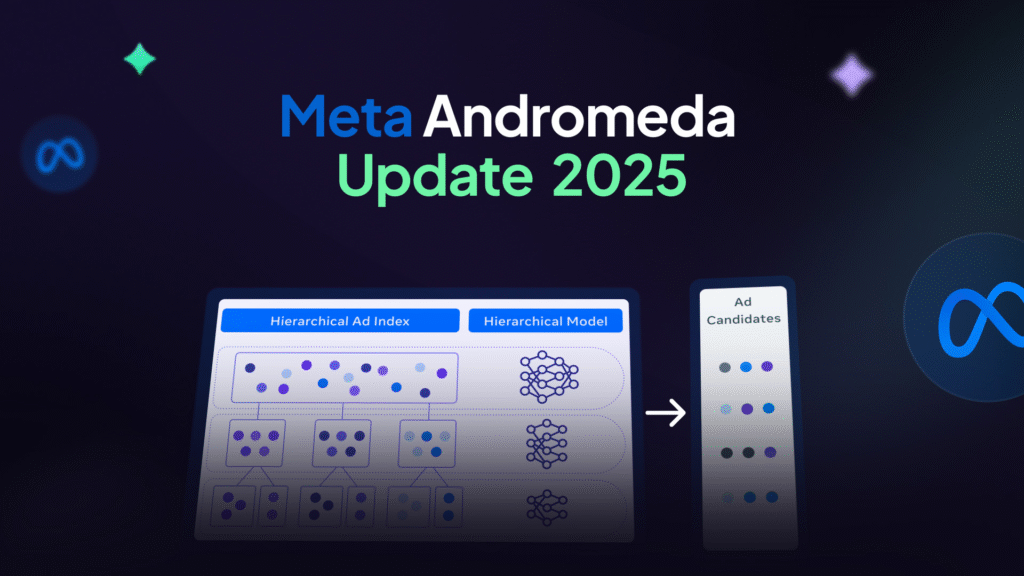
In marketing, Andromeda refers to Meta’s newer optimization engine controlling ad delivery, emphasizing broad audiences, competitive creative testing, and outcome-focused distribution.
The best strategy uses a modular structure separating retention, retargeting, and prospecting, with a prospecting CBO built around competitive creative packs.