
Four words that sum up marketing genius: Enlarge the holes.
This simple idea lies at the heart of one of the most outstanding design decisions for a product ever. It is a good example of the impact of small changes to a design. Let’s consider a real-life example.
A Minor Modification That Transformed Product Design
When Colgate’s sales became stagnant, Colgate didn’t do anything big or flashy. They introduced a change so small that people didn’t even realize what had changed. Colgate increased the diameter of their toothpaste tube from 5 to 6 mm.
That’s it.
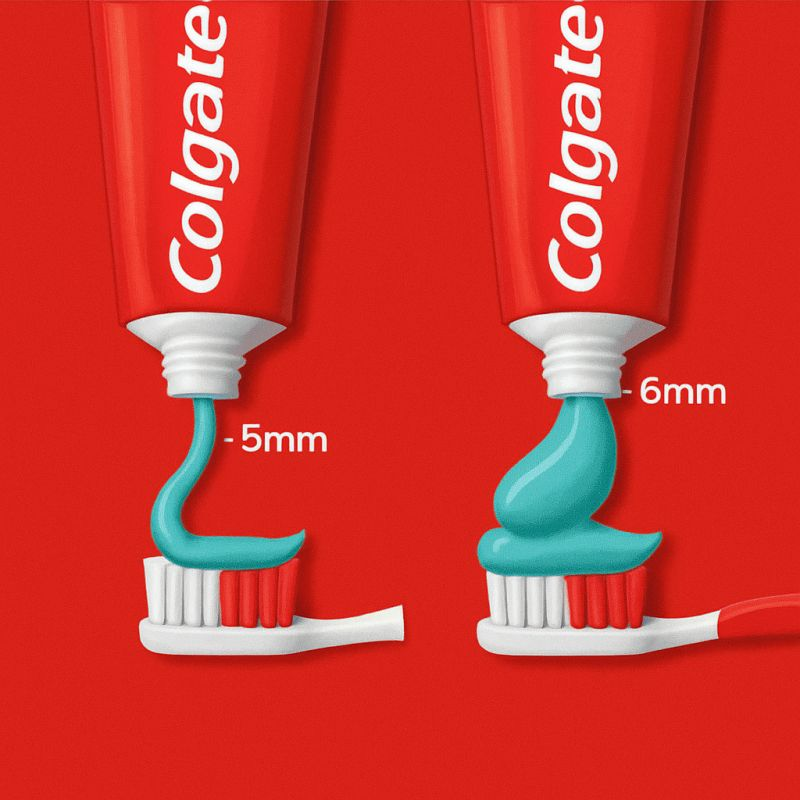
The result?
Over 40% more toothpaste was dispensed with each use. Tubes ran out faster. Customers repurchased sooner. Sales jumped by 40%.
This wasn’t luck. It was product design rooted in behavioral psychology—understanding how people already behave and aligning the product with that reality.
The lesson is simple: Great product design doesn’t force new habits. It works with existing ones.
Why the Best Product Design Is Often Invisible
The most brilliant part of Colgate’s move wasn’t the outcome; it was that customers never felt manipulated. There was no friction, no learning curve and no announcement.
That’s what elite product design looks like.
Instead of asking, “How do we sell more?”
They asked, “How do people already use this?”
This principle shows up again and again in the world’s most successful products.
And the framework behind it has a name.
Design Thinking: The Backbone of Modern Product Design
Design Thinking is not just for designers. It’s for anyone solving real-world problems. At its core, it’s a user-first approach to product design that replaces assumptions with observation.
There are five steps in the process:
- Empathize: Understand users’ needs, frustrations, and what drives their actions.
- Define: Clearly identify the issue and look for trends.
- Ideate: Brainstorm freely and generate ideas.
- Prototype: Create fast, crude iterations of concepts.
- Test: See actual behavior, take notes, make adjustments, and repeat.
This structure is what separates good product design from great product design.
Let’s see how global brands put this into action.
Nike: Product Design Built on Empathy and Performance
Nike designs for people, not trends.
Every choice is based on performance, comfort, and cultural significance. It took 195 prototypes to perfect the Flyknit Racer before it became a reality. That level of iteration is serious commitment to product design.
Even their iconic Air Force 1 campaigns balanced athletic performance with personal expression. Nike listens first and then designs.
Airbnb: Creating Trust Through Product Design
In the beginning, trust was a major issue for Airbnb.
People were reluctant to stay in the houses of strangers. The team examined actual user behavior rather than speculating. They enhanced listing photos, revamped their interface, and included writing prompts to help hosts come across as more reliable.
The real breakthrough? The founders went door to door in New York, personally photographing listings. That single move doubled bookings.
This is product design driven by empathy, not assumptions.
Netflix: Using Experimentation to Support Product Design
Netflix is very scientific behind the scenes, even though it may look very effortless.
All aspects, such as “Skip Intro, Because You Watched” or autoplay, are actually derived from an analysis of user preference rather than judgment. Too many options overwhelm users; hence, Netflix reduces their cognitive load. There was no friction due to a preference for efficiency.
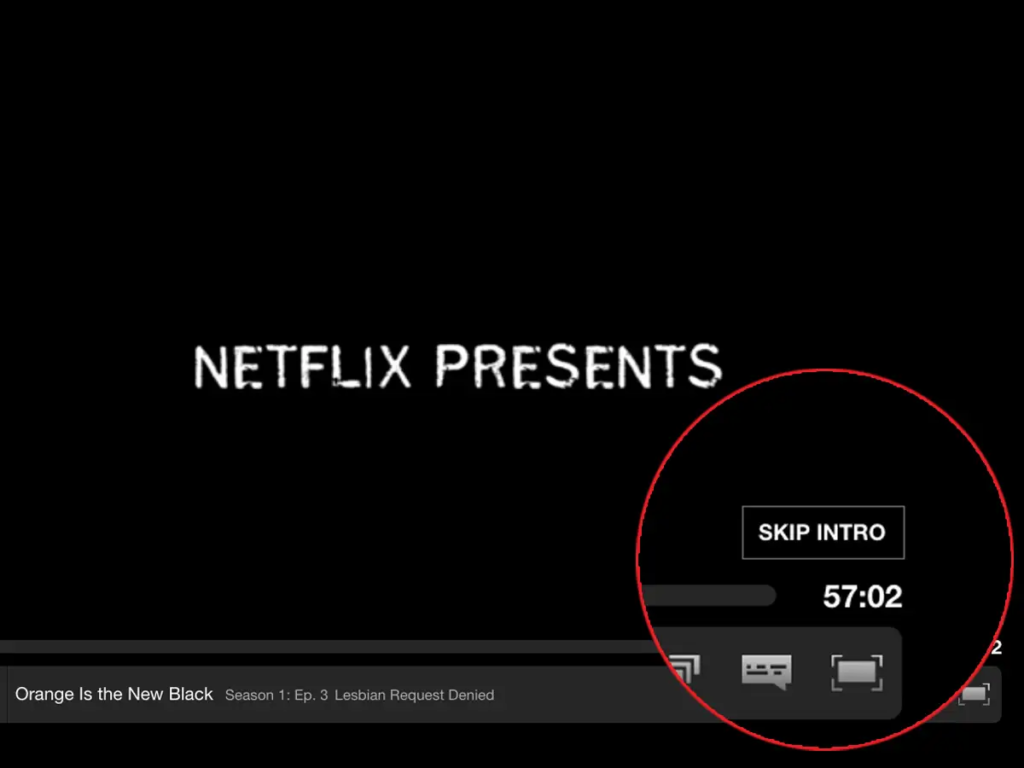
What’s their secret? Continuous A/B testing and experimentation.
Before Netflix scaled to millions of users, they tested their ideas with real-world behavior by viewing their product design as experiments.
GE Healthcare: Turning Fear Into Experience Through Product Design
For children, MRI machines are terrifying. GE Healthcare‘s designer recognized this and decided to prioritize empathy over technical improvements.
As a result, MRI rooms were converted into space missions, pirate ships, and jungle safaris for the Adventure Series.
Scans became stories. Anxiety dropped. Anaesthesia use reduced. Patient satisfaction exceeded 90%.
Uber Eats: Designing for an Entire Ecosystem
Uber Eats didn’t just design an app, they designed a system.
They spoke to customers, delivery partners, and restaurant owners. Employees shadowed deliveries, joined ride-alongs, and held informal feedback sessions.
Innovation happened not in boardrooms, but on the street.
Great product design listens at every level.
Oral-B and Google: Seeing Through a Child’s Eyes
Oral-B partnered with IDEO to study how children really brush their teeth. They noticed kids don’t use a light pinch; they naturally hold the brush with a full-handed grip.
The solution? A wider, softer, playful handle. A daily chore became a happy habit after a simple epiphany.
In a similar vein, Google decided that kids learned better with physical programming blocks called Project Bloks than with screens.
This is product design shaped by observation, not instruction.
What All Great Product Design Has in Common
The trend is evident whether it is applied to toothpaste, streaming services, medical care, or education:
- Pay attention to actions rather than words.
- Test ideas before scaling them
- Design for behavior, not ideals
- Make small, intelligent changes
This philosophy is exactly how we approach growth at Viral Omega, by focusing on strategy, behavior, and subtle optimizations that compound over time.
The Final Takeaway
The smartest product design decisions rarely scream for attention.
They whisper.
- They make life easier.
- They remove friction.
- They align with human behavior.
Sometimes enlarging the hole is all that is required. Everything changes at that point.
Colgate increasing the toothpaste tube opening from 5 mm to 6 mm, dispensing more paste per use, is a clear product design example rooted in consumer behavior.
Understand how users already behave, observe real usage, test small changes, and make subtle product design improvements that align with existing habits rather than forcing new ones.
Netflix leads its product strategy through experimentation, forming hypotheses, running A/B tests, observing real user behaviour, and iterating product design to improve customer satisfaction at scale.
Product design helps businesses grow by aligning products with real user behavior, reducing friction, and making subtle improvements that increase usage, satisfaction, and repeat purchases.
Product design influences behavior by working with existing habits rather than forcing new ones, allowing users to act naturally while quietly improving outcomes.